

At first glance, modern digital games appear to be driven entirely by visual storytelling, artistic design, and real-time player input. However, beneath the shifting pixels and immersive soundscapes lies a rigid, complex layer of mathematical architecture. From the random item drops in role-playing adventures to the complex distribution matrices in predictive strategy games, mathematics is the invisible engine that dictates game mechanics, balances difficulty, and shapes the overall player experience.
For beginners entering the digital space, understanding the role of probability and mathematical modeling is crucial. It transforms how one interacts with software, moving the player from a state of passive reliance on “luck” to an analytical mindset capable of decoding a system’s core design.
The Core Foundation: The Law of Large Numbers and Expected Value
To understand how mathematics governs interactive systems, one must first grasp two foundational concepts in probability theory: Expected Value (EV) and the Law of Large Numbers (LLN).
1. Expected Value ()
Expected value is the predicted average outcome of a specific action if that action is repeated infinitely. In digital design, every random event—whether it is the percentage chance of landing a critical hit with a virtual sword or the likelihood of drawing a specific card from a digital deck—is assigned a mathematical value.
The formula for basic expected value is represented as:
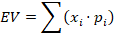
Where represents the value of the outcome and
represents the probability of that outcome occurring. If a game mechanic offers a high reward but has an incredibly low probability of occurrence, its expected value remains low. Developers use this balancing equation to ensure that games remain challenging and that reward structures are not easily exploited.
2. The Law of Large Numbers
The Law of Large Numbers dictates that while short-term results can be highly volatile and unpredictable, the cumulative results of a system will inevitably align with the theoretical probability over a large number of trials. For a beginner, this is a vital realization: short-term “winning streaks” or “losing streaks” are merely statistical anomalies (variance) within a perfectly functioning, predictable mathematical framework.
Random Number Generation (RNG): The Architecture of Chance
In the physical world, randomness is governed by environmental physics—the tumble of a plastic die, the friction on a roulette wheel, or the shuffling of paper cards. In the digital realm, true physical randomness does not exist naturally. Instead, software engineers rely on Random Number Generators (RNG).
Modern digital platforms primarily utilize Pseudo-Random Number Generators (PRNGs). These are highly sophisticated mathematical algorithms that begin with a base number, known as a “seed value” (often derived from the computer’s internal clock down to the millisecond). The algorithm processes this seed through complex algebraic formulas to output a sequence of numbers that mimics true mathematical randomness.
For players, understanding PRNG architecture dispels the myth of “machine memory.” A standard digital PRNG does not know or care if a player has lost five times in a row; each computational cycle is a fresh calculation based entirely on the mathematical parameters embedded within the software code.
Combinatorics and Matrix Grid Optimization
Many digital entertainment platforms rely heavily on combinatorics—the branch of mathematics concerning the study of finite, discrete structures and combinations. Whenever a game involves selecting a subset of items from a larger pool, or arranging symbols across a multi-tiered grid layout, combinatorics dictates the total number of possible outcomes.
Consider a standard symbol matrix layout. The total number of unique combinations escalates exponentially based on the number of unique symbols assigned to each vertical grid line (reel). Managing these massive combination matrices requires robust backend engineering to ensure that data delivery remains instantaneous and mathematically precise.
[ Symbol A ] [ Symbol B ] [ Symbol C ] [ Symbol D ] [ Symbol E ]
[ Symbol F ] [ Symbol G ] [ Symbol H ] [ Symbol I ] [ Symbol J ]
[ Symbol K ] [ Symbol L ] [ Symbol M ] [ Symbol N ] [ Symbol O ]
Deep-Dive Reference: Structural Analysis of Numerical Networks
For enthusiasts and analytical minds looking to study how these dense combinatoric grids operate in real-time, analyzing active web architectures provides invaluable clarity. Portals specializing in highly organized matrix distributions show exactly how backend servers handle rapid algorithmic calculations without lagging. Analysts and players frequently visit established, high-traffic data platforms like harga toto to study how regional probability games structure their numerical draws, offering a clear real-world look at how clean database management interfaces with strict probability algorithms to serve millions of data points smoothly to a global user base.
By exploring how these optimized networks manage sequential inputs, beginners can better appreciate the mathematical precision required to keep digital frameworks stable, secure, and entirely unbiased.
The Psychology of Game Balancing: Risk vs. Reward
Why do mathematical game structures hold human attention so effectively? The answer lies in the deliberate calibration of the risk-to-reward ratio. Human beings are evolutionary wired to seek patterns and evaluate risks. If a digital game is entirely predictable, the brain loses interest rapidly. If it is entirely chaotic and unreadable, the player becomes frustrated and abandons the interface.
Mathematical game designers operate in a sweet spot known as flow state optimization. By utilizing specific mathematical ratios, developers ensure that players experience just enough variance (unpredictability) to keep the adrenaline flowing, while maintaining a reliable underlying structure that rewards long-term strategic calculation.
Understanding Volatility Index ()
In digital gaming terminology, this balance is often referred to as a game’s volatility index:
- Low Volatility: The system yields frequent, smaller rewards. The risk curve is flat, making it ideal for beginners seeking a steady, low-stress experience.
- High Volatility: Rewards are sparse but massive when they do occur. The risk curve is steep, demanding immense emotional discipline, a larger resource allocation, and a deep understanding of variance.
Conclusion: Turning Math into Strategy
Ultimately, every digital interaction on an entertainment platform is an exercise in applied mathematics. Whether you are calculating the drop rate of a rare item, analyzing a matrix grid layout, or evaluating the expected value of a tactical decision, you are speaking the language of probability.
For a beginner, lifting the veil of visual graphics to look at the underlying mathematical numbers is an empowering transition. By recognizing that luck is simply variance, that randomness is dictated by calculated algorithms, and that platforms rely on rigid structural frameworks, you can approach modern digital games with a heightened level of clarity, discipline, and strategic appreciation.
