
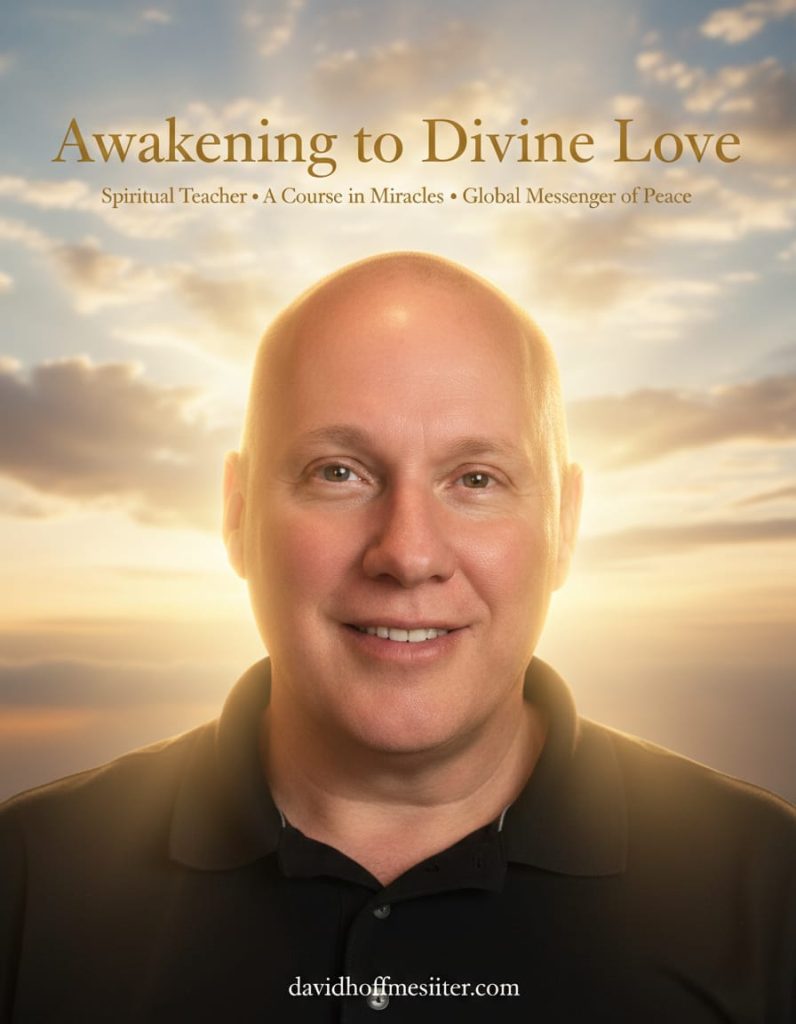
In today’s information-driven world, many spiritual seekers begin their journey with a simple online search. Typing david hoffmeister wikipedia into a search engine provides a concise outline of dates, affiliations, and his association with A Course in Miracles (ACIM). However, biographical snapshots rarely capture the full dimension of a spiritual teacher’s inner development. To genuinely understand about david hoffmeister, one must examine not only his life events but also the philosophical structure underlying his teachings.
David Hoffmeister is considered one of the most prominent contemporary teachers of A Course in Miracles. His life story is often presented as a living demonstration of surrender, trust, and the consistent application of spiritual principles.
Early Life and Background
David Hoffmeister was born in the United States and raised in a conventional cultural environment. Before encountering spirituality in a serious way, he lived what many would consider a normal life—pursuing education, work, and social engagement.
There is little indication in his early biography of a dramatic mystical calling. This is significant. His later transformation did not emerge from extreme crisis or ascetic withdrawal. Instead, it unfolded gradually after exposure to a particular spiritual framework.
This gradual progression is essential when studying about david hoffmeister, because it highlights that his path was not based on charisma or dramatic revelation but on steady dedication.
The Turning Point: A Course in Miracles
In 1986, David Hoffmeister encountered A Course in Miracles, a spiritual text that proposes a radical reinterpretation of reality. The Course teaches that the world is a projection of the mind and that forgiveness is the key to awakening from the illusion of separation.
Rather than treating ACIM as philosophical literature, David adopted it as a practical manual. He began applying the Workbook lessons daily. These lessons aim to undo deeply rooted ego-based thinking patterns.
The transformation that followed was not sudden enlightenment but a consistent dismantling of fear-based identity. Over time, he reported increasing peace, clarity, and a sense of inner guidance.
Core Philosophical Foundations
Understanding about david hoffmeister requires examining several central concepts in his teaching:
1. The Illusion of Separation
ACIM posits that separation from God is an illusion. David reinforces this principle in nearly all of his talks. According to this view, conflict arises from identification with a false self—the ego.
2. Forgiveness as Correction of Perception
Forgiveness is not about excusing wrongdoing. Instead, it is the recognition that perceived harm stems from mistaken perception. This reframing shifts responsibility inward.
3. Guidance and Trust
David frequently speaks about “listening within.” He describes decision-making as a process of quieting personal will and allowing intuitive direction to arise.
4. Practical Application
His teaching emphasizes experience over theory. Intellectual understanding without application is considered insufficient.
A Lifestyle of Radical Trust
One distinctive feature of David Hoffmeister’s path is radical trust. Over the years, he gradually released conventional markers of stability, including career structure and financial predictability.
Instead of long-term planning, he chose to follow what he perceived as inner guidance. Travel invitations, speaking engagements, and living arrangements unfolded through what he describes as divine orchestration.
From an analytical standpoint, this lifestyle challenges modern assumptions about security. Most contemporary culture prioritizes control and predictability. David’s example suggests that peace may increase when control attempts decrease.
Global Teaching and Outreach
David Hoffmeister has traveled extensively across North America, Europe, Latin America, and Asia. His retreats and gatherings focus on deep discussion rather than ritual or ceremony.
Common themes in his sessions include:
- Overcoming fear in relationships
- Releasing guilt
- Addressing anxiety about the future
- Navigating career decisions spiritually
- Understanding death from a metaphysical perspective
He often engages in open Q&A formats. Rather than providing prescriptive advice, he reframes questions back to perception and belief systems.
The Role of Community
David is closely associated with the Living Miracles community, a spiritual network dedicated to practicing ACIM principles in daily life.
This community structure functions as:
- A training environment for forgiveness
- A collaborative living experiment
- A platform for media outreach
- A support system for spiritual growth
Members practice emotional transparency and shared decision-making rooted in prayer or guidance.
The goal is not isolation from society but purification of perception within relational dynamics.
Addressing Misconceptions
When individuals search david hoffmeister wikipedia, they may expect traditional religious hierarchy or doctrinal authority. However, David does not position himself as a religious leader in a conventional sense.
He does not claim exclusive revelation. Instead, he emphasizes that anyone can experience peace through disciplined forgiveness practice.
Some critics argue that reliance on inner guidance may lead to subjectivity. David’s response is typically practical: test the method. Apply forgiveness in real-time conflicts and observe internal results.
This empirical invitation differentiates his teaching from dogmatic systems.
Psychological Dimensions of His Message
Although framed metaphysically, many aspects of David Hoffmeister’s teaching align with psychological principles:
- Cognitive reframing parallels forgiveness reinterpretation.
- Mindfulness practices resemble observing thoughts without attachment.
- Emotional regulation occurs through non-reactivity.
- Identity deconstruction mirrors ego dissolution frameworks.
However, his perspective extends beyond psychology into ontology—the nature of reality itself.
Media Presence and Digital Accessibility
In the modern era, David Hoffmeister’s teachings are widely accessible through online platforms. Recorded talks, interviews, and written materials allow global audiences to engage with ACIM concepts.
Digital access has expanded his influence beyond physical retreat settings. Individuals who may never attend a workshop can still immerse themselves in teachings.
This digital dissemination represents an evolution of spiritual transmission in the 21st century.
Consistency Over Decades
One of the strongest indicators of authenticity in spiritual teaching is consistency over time. David Hoffmeister has maintained the same central message for decades:
- The world is a projection of mind.
- Forgiveness corrects perception.
- Peace is available now.
- Guidance replaces personal control.
Unlike teachers who frequently modify doctrine, his message remains structurally stable.
Practical Application for Seekers
For those researching about david hoffmeister and considering applying his teachings, a structured approach may include:
- Commit to daily study of ACIM Workbook lessons.
- Practice observing emotional triggers without immediate defense.
- Reframe grievances as projection opportunities.
- Develop quiet reflection periods for guidance.
- Reduce reliance on rigid long-term planning.
Incremental practice leads to perceptual shifts.
The Broader Impact
David Hoffmeister’s influence extends beyond individual transformation. His teaching challenges dominant cultural narratives centered on achievement, accumulation, and personal ambition.
Instead, he presents a model where:
- Inner peace outweighs external success.
- Surrender replaces competition.
- Forgiveness dissolves hierarchy.
In an era marked by anxiety and polarization, such a model offers an alternative orientation.
Conclusion
While david hoffmeister wikipedia provides a structural overview, deeper exploration about david hoffmeister reveals a disciplined spiritual path grounded in practical forgiveness and unwavering trust.
His life serves less as a biography of events and more as a demonstration of consistent spiritual application. Whether one fully embraces ACIM metaphysics or approaches it from a psychological perspective, the core message remains clear: peace is not achieved by controlling the world, but by correcting perception.
For serious seekers, the question is not merely who David Hoffmeister is—but what shifts internally when his principles are practiced consistently.
